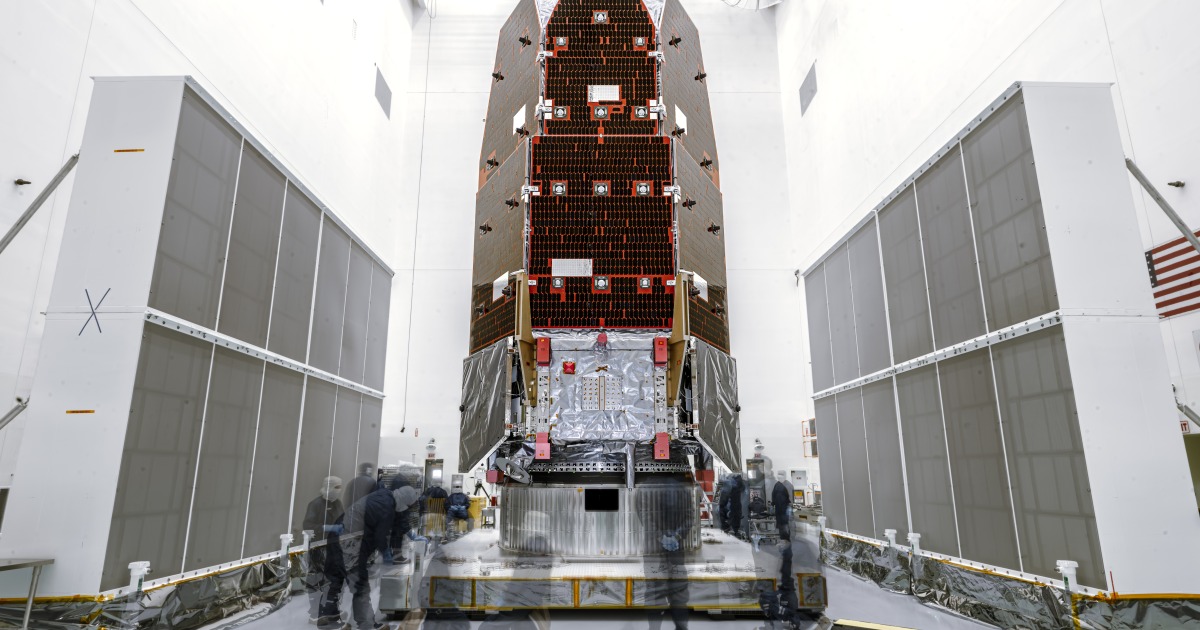
Nineteen years in the making, NASA's Roman Space Telescope has officially launched, ushering in a new era of astronomical discovery. The telescope, named after the groundbreaking astronomer Nancy Grace Roman, aims to explore the universe's hidden wonders, focusing particularly on dark energy, exoplanets, and galaxy formation. Its launch represents a monumental leap in our quest to comprehend the cosmos and our place within it.
The Launch: A Historic Event
On [insert launch date], the Roman Space Telescope lifted off aboard a SpaceX Falcon Heavy rocket from the Kennedy Space Center in Florida. This event was not only a technological triumph but also a testament to collaborative efforts among scientists, engineers, and institutions. NASA Administrator Bill Nelson remarked on the importance of this mission, stating that it will allow humanity to peer deeper into the universe than ever before.
What Makes the Roman Space Telescope Unique?
The Roman Space Telescope is expected to provide a field of view 100 times greater than that of the Hubble Space Telescope. This expansive view will allow it to capture vast swathes of the sky in a single observation, making it particularly effective for surveying large areas of the universe.
Equipped with a wide-field camera and a focus on infrared observations, Roman will be able to detect faint objects that are invisible to the naked eye. Its capabilities will allow astronomers to study distant galaxies, uncover new exoplanets, and investigate the mysterious phenomena of dark energy, which is believed to be responsible for the accelerated expansion of the universe.
Why Dark Energy Matters
Dark energy remains one of the biggest enigmas in modern astrophysics. It is estimated that dark energy constitutes about 68% of the universe, yet its nature is still largely unknown. Understanding dark energy is crucial for answering fundamental questions about the universe's fate and the mechanisms driving its expansion.
The Roman Space Telescope will contribute significantly to this understanding by mapping the distribution of galaxies across the cosmos. By observing how galaxies cluster and interact over time, researchers hope to glean insights into how dark energy influences cosmic growth.
Exoplanets and the Search for Life
In addition to its dark energy research, the Roman Space Telescope will play a pivotal role in the search for exoplanets. Its advanced capabilities will enable it to detect and characterize planets outside our solar system, including those in the 'habitable zone' where conditions may be right for life.
Roman's observations will complement those made by other missions, such as the James Webb Space Telescope, which focuses on analyzing the atmospheres of exoplanets for potential biosignatures. Together, these missions will enhance our understanding of planetary systems and the conditions that might support life beyond Earth.
The Broader Impact of the Roman Space Telescope
The launch of the Roman Space Telescope is a watershed moment not only for NASA but for the entire field of astronomy. The data collected from its observations will be made publicly available, ensuring that scientists and researchers worldwide can leverage this wealth of information.
This open-access model fosters collaboration and innovation, allowing researchers to explore new hypotheses, develop advanced models, and contribute to a collective understanding of the universe. As a result, the Roman Space Telescope is poised to accelerate discoveries and inspire future generations of scientists.
What to Watch Next
In the coming months, the Roman Space Telescope will undergo a series of tests and calibrations to ensure its instruments are functioning optimally. Following these preliminary checks, the telescope will begin its primary mission, which is expected to last for five years, with the possibility of an extension based on its performance.
As the mission progresses, astronomers will be eagerly awaiting the first images and data releases from the telescope. These findings could revolutionize our understanding of the universe, providing insights into the formation of galaxies, the nature of dark energy, and the potential for life on distant worlds.
Researchers will also focus on ensuring that the telescope operates in conjunction with other upcoming missions, facilitating a more comprehensive exploration of the cosmos. The synergy among different telescopes and space missions will be crucial in addressing some of the most pressing questions in astrophysics.
Conclusion
The launch of NASA's Roman Space Telescope marks a significant milestone in the exploration of the universe. With its unprecedented capabilities, it promises to unlock new knowledge about dark energy, exoplanets, and the formation of galaxies. As we stand on the brink of this new era in astronomy, the insights gained from the Roman Space Telescope will not only deepen our understanding of the cosmos but also fuel the imagination and curiosity of generations to come.
For more detailed information on the Roman Space Telescope and its mission, visit NASA's official page.