Introduction
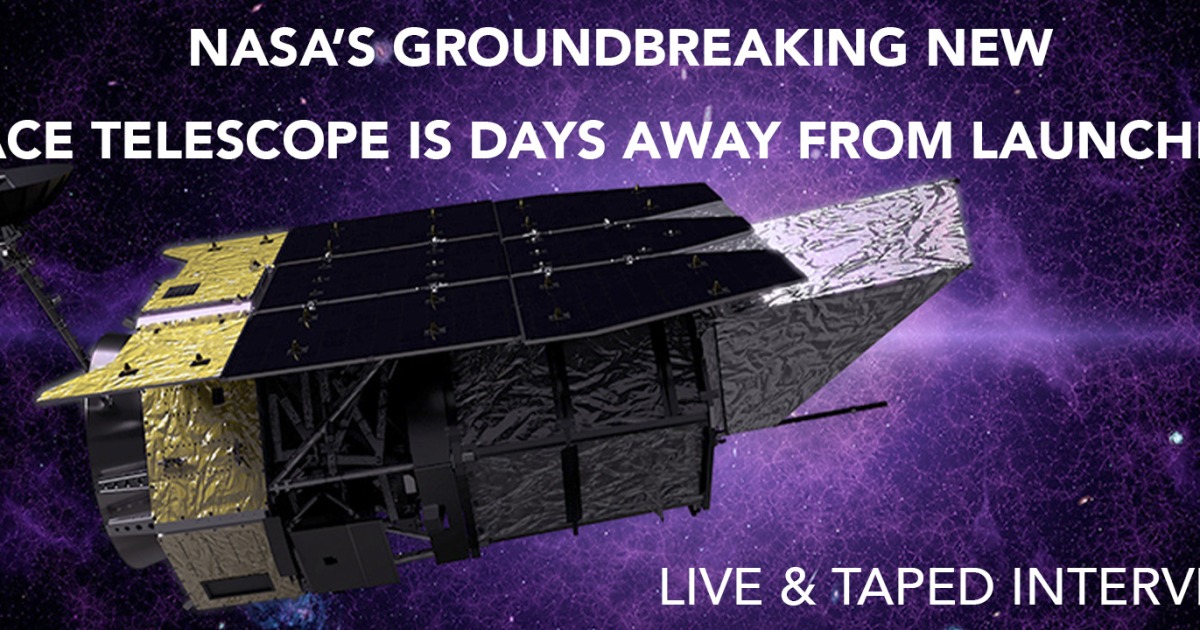
The launch of NASA's Roman Space Telescope, a mission anticipated to revolutionize our understanding of the universe, took place earlier today. With the successful deployment of this advanced observatory, astronomers and scientists worldwide are eager to explore the implications of its capabilities. Following the launch, NASA and SpaceX officials held a post-launch press conference to discuss the mission's significance, operational details, and next steps.
The Launch
The Roman Space Telescope, named in honor of the pioneering astronomer Nancy Grace Roman, was successfully launched aboard a SpaceX Falcon Heavy rocket from the Kennedy Space Center in Florida. This launch represents a culmination of years of planning, development, and collaboration between NASA and private aerospace contractors. The launch occurred at approximately [insert specific time], marking the beginning of a mission that is expected to last for five years.
What is the Roman Space Telescope?
The Roman Space Telescope is designed to address key questions about dark energy, exoplanets, and the formation and evolution of galaxies. Equipped with a wide-field camera that captures images with unprecedented clarity and depth, the telescope will survey large portions of the sky, allowing astronomers to gather data on cosmic phenomena at an unprecedented scale.
Key Features of the Roman Space Telescope
- Wide-Field Imaging: The telescope's wide-field camera can capture images of large swathes of the night sky, potentially surveying millions of galaxies.
- Precision Measurements: Roman’s instruments will enable scientists to measure the shapes and distances of galaxies with exceptional accuracy, crucial for understanding dark energy.
- Exoplanet Studies: The telescope will utilize gravitational microlensing to detect and study exoplanets, expanding our knowledge of worlds beyond our solar system.
Why This Launch Matters
The Roman Space Telescope’s mission is poised to provide critical insights into some of the most profound mysteries of modern astrophysics. One of its primary goals is to investigate the nature of dark energy, a force believed to be driving the accelerated expansion of the universe. By mapping the distribution of galaxies over cosmic time, scientists hope to better understand how dark energy influences cosmic evolution.
Additionally, the mission will enhance our understanding of exoplanets, contributing to the broader search for life beyond Earth. With the growing interest in astrobiology, insights from the Roman Space Telescope could have profound implications for our understanding of habitable worlds.
Context: The Evolution of Space Telescopes
The Roman Space Telescope joins a legacy of groundbreaking observatories that have transformed our understanding of the cosmos. Following in the footsteps of the Hubble Space Telescope and the upcoming James Webb Space Telescope, Roman is set to complement these missions with its unique capabilities.
The Hubble Space Telescope has provided stunning images and vital data since its launch in 1990. Its observations have led to significant discoveries, including the accelerated expansion of the universe. Meanwhile, the James Webb Space Telescope, scheduled to launch soon, aims to explore the universe’s earliest galaxies and the formation of stars and planetary systems.
In this context, the Roman Space Telescope is not merely an addition to the existing constellation of space observatories but rather a mission that will enable unprecedented comparisons and cross-correlation of data across different wavelengths and epochs.
Post-Launch Highlights
During the post-launch press conference, NASA officials expressed their excitement about the mission and its potential. Key figures from both NASA and SpaceX discussed the successful launch sequence, highlighting the importance of collaboration in modern space exploration. The conference also covered the engineering challenges faced during the development phase and how these were overcome.
Key Takeaways from the Press Conference
- Collaboration is Key: The partnership between NASA and SpaceX exemplifies how public-private collaborations can yield significant advancements in space technology.
- Future Missions: Officials hinted at upcoming missions that could build on the success of the Roman Space Telescope, underscoring the importance of continued investment in space exploration.
- Public Engagement: NASA emphasized the role of public interest in space missions and how citizen scientists can contribute to data analysis.
What’s Next for the Roman Space Telescope?
As the Roman Space Telescope embarks on its journey, several key milestones will shape its operational timeline. Over the coming months, the telescope will undergo a series of calibrations and tests to ensure its instruments are functioning correctly. Following this phase, the telescope will begin its scientific observations, with the first data releases expected within a year of the launch.
Anticipated Milestones
- Calibration Phase: Expected to last several months, this phase involves testing and calibrating the telescope’s instruments.
- First Light Observations: The telescope will begin capturing its first scientific images, likely focused on nearby galaxies.
- Data Releases: The first sets of data will be made available to the scientific community, enabling researchers to begin their analyses.
Conclusion
The launch of the Roman Space Telescope is a landmark moment in the field of astronomy. With its ambitious goals of unraveling the mysteries of dark energy and expanding our understanding of exoplanets, this mission holds the promise of groundbreaking discoveries. As it embarks on its operational phase, the scientific community and the public alike will be keenly watching to see what this powerful observatory reveals about our universe.
For ongoing updates and insights into the mission, interested parties should follow NASA’s official channels and stay tuned for upcoming data releases that could illuminate the cosmos in new and exciting ways.